Carbon Fiber CFRP Drones
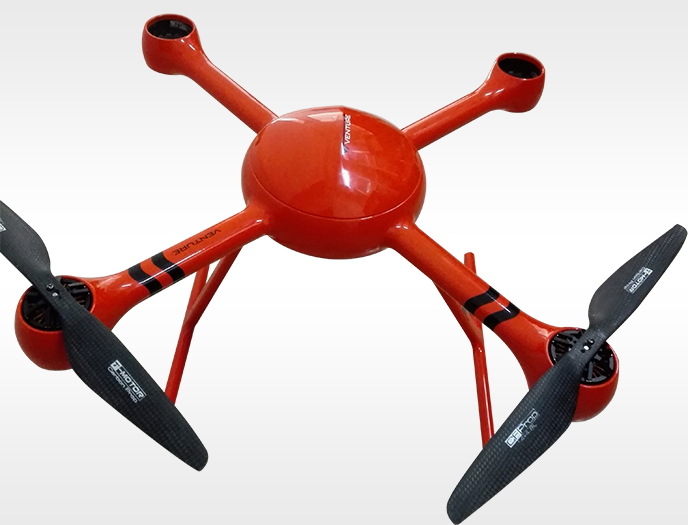
Carbon fiber composites exhibit excellent strength, making them suitable for various parts of a drone, such as the arms and wing skeletons. Compared to aluminum alloys, carbon fiber reduces the weight by 30%, improving the drone's endurance and increasing its payload capacity
Carbon fiber composites exhibit excellent strength, making them suitable for various parts of a drone, such as the arms and wing skeletons. Compared to aluminum alloys, carbon fiber reduces the weight by 30%, improving the drone's endurance and increasing its payload capacity. The high tensile strength, corrosion resistance, energy absorption, shock resistance, and stable chemical properties of carbon fiber also effectively guarantee the drone’s longevity. Most agricultural UAVs and consumer-grade aerial drones use carbon fiber tubes as the main structural material, establishing a strong position for carbon fiber tubes in this field.
The weight of a drone directly affects flight time and actual payload. The greater the proportion of carbon fiber composite parts, such as the shell and arms, the more significant the weight reduction effect. The saved weight space can be used to carry more fuel cells and auxiliary equipment, giving the drone a competitive edge. In the production of carbon fiber components, integration of the shell and arms can be achieved, reducing assembly parts while increasing the structural strength of the body.
With the advancement of technology and the improvement of people's living standards, drones are becoming more common in performances, aerial photography, surveillance, policing, exploration, logistics, and disaster relief. In harsh environments, the performance requirements for drones are high. For example, the wings need materials with good weather resistance, increased strength, and ease of processing, while the fuselage often requires high toughness, high strength, low-temperature resistance, and high fluidity materials. The landing gear must be made of materials with high strength and rigidity.
Compared to traditional metal materials, composite materials have gradually become the preferred choice for drones due to their lightweight, high strength, impact resistance, and corrosion resistance. Carbon fiber reinforced resin-based composites are especially favored in drone materials. The lightweight body materials of drones provide more design space for power sources such as batteries, achieving longer endurance with the same power.
Additionally, the integration of molding processes allows carbon fiber composites to be formed using methods such as molding and autoclave curing. This enables large-area, one-time molding of parts like the drone shell, reducing the use of connectors and fasteners and avoiding secondary connections. This not only reduces the weight of the body but also ensures the structural stability of the drone, improving performance, production efficiency, and enabling mass production of carbon fiber drone shells and components.
Lastly, the low creep and strong corrosion resistance of carbon fiber composites ensure excellent fatigue resistance. Even after multiple cycles of load, cracks and other issues rarely occur. They can withstand significant temperature differences without deformation and are highly resistant to corrosion from non-strong acids and alkalis, with minimal change. This results in high safety and long lifespan.
ENQUIRY