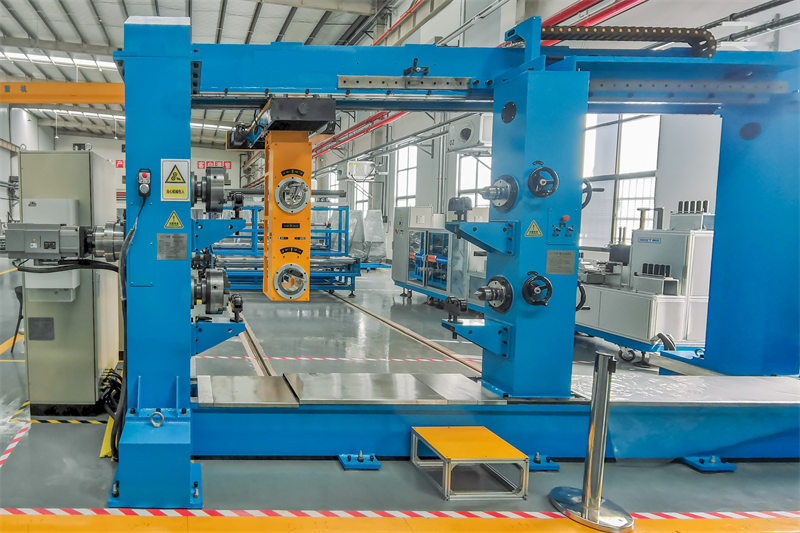
Carbon Fiber CFRP Winding Machines

The carbon fiber winding molding process involves a winding machine that follows a pre-set program on a computer, precisely weaving a set of yarns on a pre-designed mold, ultimately forming a composite material product. This highly mechanized molding process has several advantages.
The carbon fiber winding molding process involves a winding machine that follows a pre-set program on a computer, precisely weaving a set of yarns on a pre-designed mold, ultimately forming a composite material product. This highly mechanized molding process has several advantages. One key advantage is that during the entire molding process, the yarn’s pre-tension is maintained, ensuring that all carbon fibers share the load of the product, thus optimizing the material’s performance. Another advantage of the winding process is that it allows for different resin systems to be matched with carbon fibers based on special working conditions, meeting specific requirements such as fire resistance, high-temperature resistance, and strong corrosion resistance.

By adopting mechanized production, we can ensure stable product quality, increase production efficiency, and reduce production costs. Based on different customer needs, we design various layups and winding methods to ensure your pipes not only possess superior performance but also have a unique appearance.


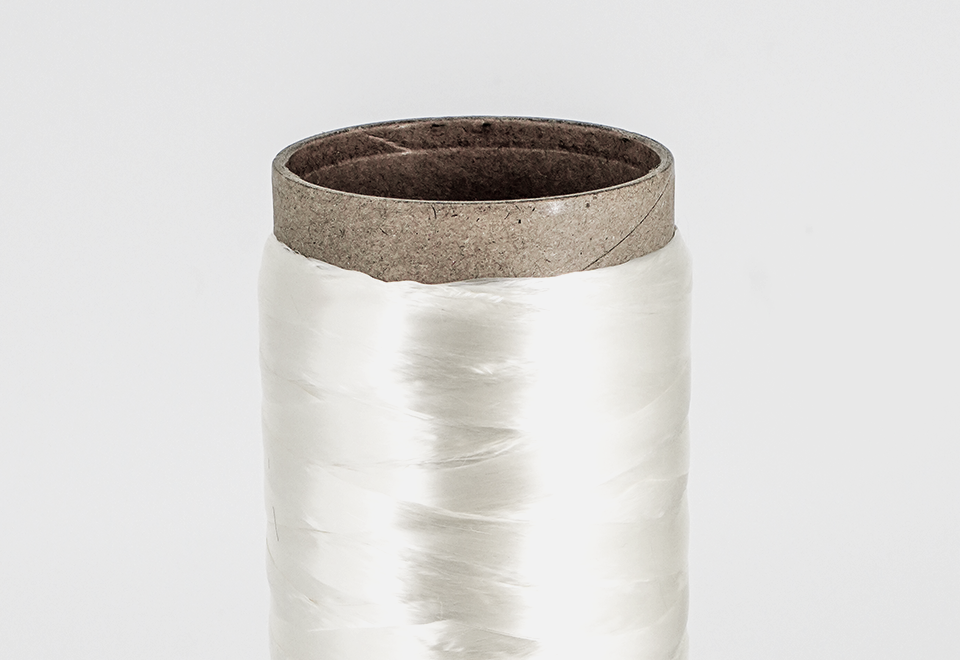
The main raw material for making carbon fiber tubes using dry winding is carbon fiber prepreg yarn. The resin content and other aspects of the yarn are precisely controlled by the raw material suppliers during the production of the prepreg yarn, which makes it easier to ensure the stability and quality of the finished product. This production method is efficient, and the production environment is clean and hygienic. However, the raw materials are relatively expensive and require strict storage conditions.


Wet Winding:

In this method, carbon fiber tows are first fully impregnated with resin before being continuously wound onto a steel core mold for the carbon fiber tube under controlled tension. This is the mainstream method for producing high-performance carbon fiber tubes.

Advantages:
- Cost-effective process that significantly reduces production costs.
- Excellent internal sealing, as air is expelled, greatly reducing product porosity.
- Even and smooth fiber distribution.
- The presence of resin lubrication minimizes carbon fiber wear during production.
- Fast production speed.

Disadvantages:
- Some wastage of resin materials.
- Difficult to precisely control resin content accuracy.
- Lower environmental friendliness

No.

Specification

Unit

Parameter

Remarks

1

Winding Length

mm


2

Maximum Winding Diameter

mm

Φ25-Φ5000


3

Number of Stations

pcs

1-4


4

Clamping Weight per Station

kg

300-15000

Per station

5

Tailstock Stroke

mm

120


6

Winding Angle Range

degrees

0~90


7

Spindle Speed (A-axis)

r/min

0~100

Adjustable

8

Carriage Movement Speed

m/min

30-60


9

Carriage Stroke

mm

1500-15000


10

Maximum Arm Extension Stroke

mm

150-2500


11

Maximum Arm Movement Speed

m/s

40 (0.67 mm/s)


12

Filament Guide Rotation Angle

degrees

±180


13

Filament Guide Rotation Speed

r/min

0~120


14

Single Fiber Tension (Static)

N

5~50

±2

15

Resin Tank Capacity

L

3-10

Depends on specifications

16

Resin Tank Temperature Control

°C

Room Temp ~120±2

Adjustable as per user needs

17

Number of Groups

sets

1-24


18

Tension Control Response Time

sec

<0.1


19

Winding & Unwinding Speed

rpm

250


20

Winding Repeat Accuracy

mm

0.1


21

Installed Power Capacity

kW

6-80


ENQUIRY

Hot Products

PRODUCTS   LIST
  • Home

    Whatsapp

    Inquiry

    Email

    Call us